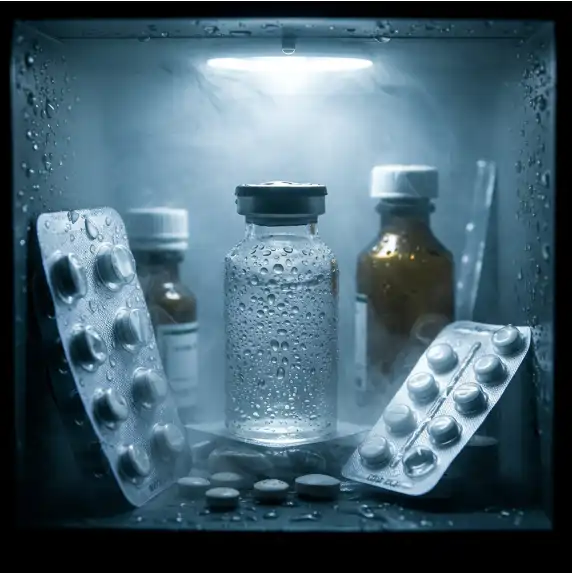
Humidity poses a significant threat to pharmaceutical products, causing chemical degradation (hydrolysis, oxidation), physical changes (caking, altered dissolution), and microbial growth. Proper storage is crucial, involving controlled environments (RH control, temperature regulation), moisture-barrier packaging, and careful handling. Dry cabinets offer advanced solutions for ultra-low humidity and stable conditions. Stability testing under ICH guidelines is essential to determine drug shelf life. Effective moisture control safeguards drug efficacy, patient safety, and regulatory compliance, ensuring quality and minimizing waste in the pharmaceutical industry.
Proper Moisture Sensitive Storage in the Pharmaceutical Industry
The pharmaceutical industry operates under a paramount directive: to ensure the safety, efficacy, and quality of medications. Achieving this requires meticulous control over every stage of the drug lifecycle, from raw material handling to final product storage. Notably, moisture, in the form of relative humidity, presents a multifaceted challenge, capable of initiating or accelerating various degradation pathways that compromise the stability and effectiveness of these vital products. This article delves into the significance of proper moisture-sensitive storage, exploring the inherent challenges, potential risks, and essential best practices.
I. The Moisture Challenge: A Threat to Pharmaceutical Integrity
Moisture, specifically in the form of relative humidity, poses a significant and multifaceted challenge to pharmaceutical products. Its presence can trigger or accelerate various degradation pathways, ultimately compromising the stability and effectiveness of medications.
Chemical Degradation
Hydrolysis: Perhaps the most common moisture-induced degradation process, hydrolysis involves the chemical breakdown of a drug molecule through its reaction with water. This can fundamentally alter the drug’s structure, leading to the formation of inactive or even toxic byproducts.
Oxidation: While oxygen can act as a catalyst, moisture often facilitates oxidation reactions, particularly in the presence of metal ions. This process can diminish drug potency and generate undesirable degradation products.
Physical Degradation
Hygroscopicity: It’s crucial to acknowledge that many active pharmaceutical ingredients (APIs) and excipients (the inactive substances that carry the API) are hygroscopic, meaning they readily absorb moisture from the surrounding air. This characteristic can lead to several adverse effects:
Caking and Clumping: Powders and granules may agglomerate or clump together, significantly affecting their flowability and consequently, the accuracy of dosing.
Changes in Dissolution: The absorption of moisture can alter the rate at which a drug dissolves, thereby impacting its absorption within the body and ultimately, its bioavailability.
Altered Polymorphism: Furthermore, the crystalline structure, or polymorphism, of a drug can undergo changes due to moisture exposure, affecting its physical properties and overall stability.
Microbial Growth: High humidity levels create an environment conducive to the proliferation of bacteria, mold, and fungi. This microbial contamination presents a substantial risk, particularly to sterile products, and can compromise the safety of non-sterile formulations.
Packaging Interactions: It is also important to recognize that moisture can interact with packaging materials, potentially leading to:
Permeation: Moisture vapor can penetrate the packaging itself, affecting the product contained within.
Degradation of Packaging: In some instances, high humidity can weaken or degrade the packaging material, further jeopardizing product integrity.
II. Identifying Moisture-Sensitive Pharmaceuticals
A diverse array of pharmaceutical products exhibit sensitivity to moisture, necessitating the implementation of specific storage protocols to ensure their quality and efficacy.
Solid Dosage Forms:
Effervescent tablets, known for their rapid dissolution, are particularly vulnerable to moisture-induced reactions.
Lyophilized or freeze-dried powders, due to their porous nature, readily absorb moisture.
Granules, the intermediate form in tablet manufacturing, can clump or cake under humid conditions.
Certain types of capsules, especially those made from gelatin, can soften or become sticky when exposed to excessive moisture.
Liquid Dosage Forms:
Solutions, where the drug is dissolved in a solvent, can undergo hydrolysis or other chemical changes in the presence of water.
Suspensions, where solid drug particles are dispersed in a liquid, can experience changes in particle size distribution and sedimentation due to moisture.
Biologics:
Many protein-based drugs, vaccines, and other biologics, with their complex molecular structures, are particularly susceptible to moisture-induced degradation, leading to loss of activity or the formation of immunogenic aggregates.
III. Best Practices for Moisture-Sensitive Storage
To effectively mitigate the risks associated with moisture, pharmaceutical manufacturers and distributors must implement a comprehensive suite of robust storage practices.
Controlled Environment Storage
Relative Humidity (RH) Control: Maintaining precise and stable RH levels is of paramount importance. This can be achieved through:
Dehumidification systems, which actively remove moisture from the air, ensuring a consistently low-humidity environment.
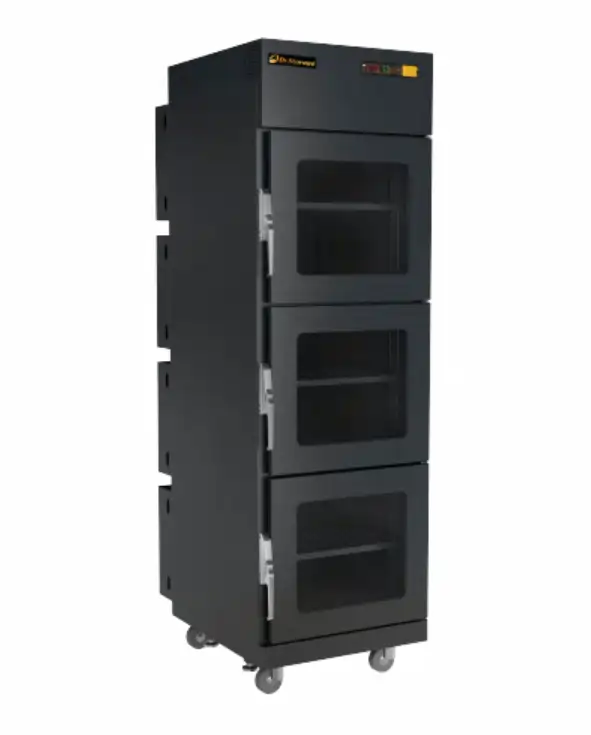
Dry cabinets, which are specialized storage enclosures designed to maintain ultra-low humidity levels, providing superior protection.
Temperature Control: Given the intricate relationship between temperature and humidity, controlling temperature becomes essential, as temperature fluctuations can directly affect the air’s capacity to hold moisture.
Monitoring and Recording: Continuous monitoring and accurate recording of both temperature and humidity levels are indispensable to ensure strict compliance and to facilitate the prompt identification of any deviations from specified storage conditions.
Appropriate Packaging:
Moisture-Barrier Packaging: The selection of packaging materials with low moisture permeability is crucial. Examples include:
Aluminum foil, known for its excellent barrier properties against moisture.
Blister packs, which provide individual protection for each dosage unit.
High density polyethylene (HDPE), a plastic with good moisture resistance.
Desiccants: The inclusion of desiccants, such as silica gel packets, within the packaging further enhances moisture absorption, effectively removing any residual moisture.
Handling Procedures:
Minimize Exposure: It is essential to strictly limit the duration of exposure to ambient humidity during critical manufacturing and packaging processes.
Proper Sealing: Ensuring that all containers are tightly and effectively sealed is a fundamental practice to prevent any moisture ingress.
Regulatory Compliance:
Adhering to relevant guidelines and regulations is non-negotiable within the pharmaceutical industry. Key examples include:
Good Manufacturing Practices (GMP), which set the standards for quality control in pharmaceutical production.
International Council for Harmonisation (ICH) guidelines on stability testing, which provide a framework for evaluating drug product stability under various conditions.
IV. Advanced Storage Solutions: The Role of Dry Cabinets
Dry cabinets represent a crucial advancement in providing the precise and controlled storage conditions demanded by moisture-sensitive pharmaceuticals. These specialized enclosures offer several key advantages:
Ultra-Low Humidity: Unlike traditional storage, many dry cabinets are designed to maintain relative humidity (RH) levels significantly below ambient conditions, offering superior protection against moisture-related degradation.
Stable Environment: Dry cabinets provide a stable internal environment, minimizing fluctuations in humidity and temperature that could potentially trigger or accelerate degradation processes.
Monitoring and Control: These cabinets are typically equipped with digital control panels and monitoring systems, allowing for precise adjustment and continuous monitoring of humidity and temperature levels, ensuring consistent storage conditions.
Customization: Dry cabinets are available in a variety of sizes and configurations, enabling pharmaceutical companies to accommodate diverse storage needs, from small quantities of research samples to large-scale storage of finished products.
V. The Importance of Stability Testing
Stability testing is an absolutely critical component of pharmaceutical development and manufacturing. This process involves a rigorous evaluation of how the quality of a drug product changes over time when exposed to various environmental factors, with humidity being a primary concern.
ICH Guidelines: The International Council for Harmonisation (ICH) plays a pivotal role by providing comprehensive guidelines for stability testing, outlining specific storage conditions and crucial testing parameters.
Storage Conditions: Stability studies are meticulously conducted under a range of conditions:
Long-term storage conditions, carefully designed to simulate typical storage conditions that the drug product is likely to encounter.
Accelerated storage conditions, which employ more extreme conditions to expedite the prediction of long-term stability and potential degradation pathways.
Data Analysis: The wealth of data generated from stability studies is then subjected to thorough analysis, ultimately providing the basis for determining the appropriate storage conditions and the crucial shelf life of the drug product.
VI. Conclusion: Ensuring Quality and Patient Safety
In conclusion, proper moisture-sensitive storage is not merely a recommendation but rather an indispensable element of pharmaceutical quality assurance. By cultivating a deep understanding of the inherent risks associated with moisture and diligently implementing robust storage practices, which often include the utilization of advanced solutions like dry cabinets, pharmaceutical manufacturers can effectively:
Guarantee the safety and efficacy of their medications, upholding the highest standards of patient care.
Extend the product’s shelf life, minimizing waste and optimizing resource utilization.
Minimize the occurrence of product recalls and the associated financial and reputational damage.
Comply rigorously with stringent regulatory requirements, ensuring adherence to industry best practices.
Ultimately, these comprehensive efforts contribute profoundly to the well-being of patients and the continued advancement of the pharmaceutical industry as a whole.
The Best Industrial Storage Cabinet for Your Warehouse
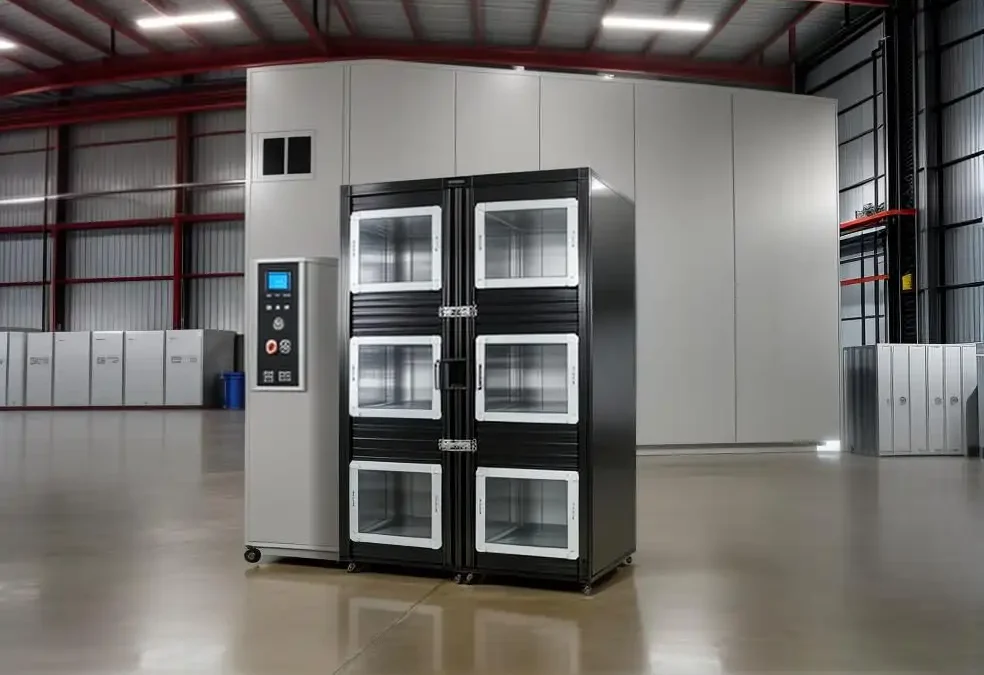
Efficiency matters profoundly in warehousing. How do you choose the best industrial storage cabinet?
Imagine a warehouse where organization serves as the cornerstone of productivity. The right industrial storage cabinet can drastically transform this space into a beacon of efficiency, meticulously storing every essential tool and component. Today, let’s explore inspiring solutions that propel your operations forward, empowering your team to reach unparalleled heights of success.
Benefits of an Industrial Storage Cabinet
The integration of an industrial storage cabinet can significantly elevate organization and efficiency within your warehouse operations.
Since 2020, numerous warehouses have experienced substantial improvements, embracing storage cabinets that redefine their logistical processes. These robust solutions not only streamline organization but also enhance workflow, catalyzing growth and facilitating seamless access to tools and components.
Moreover, it’s no small feat that these cabinets’ versatility caters to a spectrum of industries, offering a tailored fit for the particular needs of each. This ensures that your warehouse is not just achieving, but exceeding its potential by leveraging these powerful storage solutions.
Imagine the impact on the bottom line, where lost time due to disorganization is a thing of the past. Wise investments in strategic storage lead to improved productivity, increased safety standards, and the utmost optimization of available space.
Few investments promise such transformative benefits, positioning your warehouse on the pathway to greater efficiency and innovation.
Size Considerations for Your Space
When choosing an industrial storage cabinet, ensuring the cabinet fits your available space is paramount for optimal functionality.
Firstly, it’s crucial to measure your warehouse’s layout meticulously, as well as the available floor space, taking into account the height, width, and depth of the area where the cabinet will be placed. This process aids in preventing any cumbersome overhang or wasted space that might hinder productivity. The ultimate goal is to make the most of your warehouse environment, adapting each cabinet to seamlessly fit into your operational flow.
Moreover, consider the cabinet’s size in relation to necessary movement within the warehouse. An oversized cabinet might intrude on traffic flow, causing potential disruptions and risking safety. Remember, efficient warehouse management includes not only storage solutions but also maintaining an environment that facilitates ease of movement.
Finally, factoring in size considerations means balancing storage needs with spatial economy. Envision a cabinet that optimizes the available space while maximizing storage capacity. This foresight ensures your operations remain streamlined, supporting sustained growth and efficiency. The strategic selection of appropriately sized cabinets empowers you to harness your warehouse space’s full potential, fostering an atmosphere of innovation and productivity.
Customization Options Available
Tailoring an industrial storage cabinet to your exact needs can significantly enhance the effectiveness of your warehouse operations. How can you leverage these customizable options?
In 2023, customization has transcended beyond mere color choices, offering nuanced solutions tailored to specific industrial requirements. You now have the unprecedented opportunity to select varying shelf heights, compartment sizes, and even the type of locking mechanisms that suit your security protocols.
Moreover, it’s not just about what’s contained within—there’s also flexibility in choosing the material and finish of the cabinet that best withstands your operational demands. Whether dealing with corrosive materials or humidity, the right choice can maximize the cabinet’s longevity and upkeep.
Understanding the nuances of your industry and operational flow, design solutions tailored to cater to niche requirements. From ergonomic designs to enhanced mobility features, each unique aspect works symbiotically to achieve peak organizational efficiency and innovation.
Customized storage cabinets unfurl pathways to operational excellence, transforming your workspace into a haven of productivity and creativity.
Safety Features to Look For
Safety in your warehouse is paramount.
Achieving a secure working environment means choosing industrial storage cabinets equipped with robust safety features. These features must not only protect the valuable contents but also ensure the well-being of staff interacting with them. Opt for models with advanced locking mechanisms to mitigate unauthorized access, minimizing potential risks.
Anticipate any potential hazards.
Evaluate the cabinet’s stability to prevent tipping over – an often overlooked yet crucial aspect of ensuring structural integrity. Consider reinforced construction and adjustable leveling feet to ensure steadfast performance.
Prioritize corrosion-resistant finishes that uphold enduring resilience against environmental stressors. With the latest 2023 innovations, feel confident selecting options designed to protect against harmful workplace conditions. These thoughtful safety features empower your team and foster a culture of vigilance and responsibility within the warehouse.
Ideal Weight Capacity for Industrial Use
Selecting the right industrial storage cabinet involves an assessment of its weight-bearing capacity, crucial for any warehouse setting. This consideration ensures safe and efficient storage of materials, preventing potential accidents.
Weight capacities typically vary in the heavy industrial storage cabinet designs, often reaching impressive moments. Selecting the appropriate one supports operational efficiency.
For optimum performance, consider cabinets that offer weight capacities ranging from 1,000 to 2,000 pounds or more, accommodating diverse storage needs effectively.
These impressive strengths are due to innovative engineering and material technology advancements, elevating them above standard commercial options.
Moreover, robust weight capacity is synonymous with durability, which contributes to longer service life. This longevity translates to sustained productivity and reduced equipment downtime, vital for thriving warehouse operations.
Ultimately, the key is finding what matches your workload’s demands. High-capacity cabinets ensure seamless integration into your warehouse, bolstering productivity and ensuring peace of mind.
Varieties of Industrial Storage Cabinet Styles
Contemporary industrial storage cabinets, a marvel of engineering innovation, cater to diverse organizational needs. Whether you’re looking for heavy-duty shelving units or secure locking solutions, today’s cabinets capture the essence of a modern workspace, designed to withstand harsh environments.
With materials ranging from steel to a blend of alloys, options like the “mesh-style lockers” have gained popularity for their breathability and visibility. Perhaps the most significant transformation is how these cabinets now seamlessly blend into the aesthetics of a warehouse while still providing the robust functionality one would expect from an industrial-grade solution.
Multi-Tier Cabinets
Multi-tier cabinets are an extraordinary embodiment of storage excellence, offering layers of organizational bliss. These cabinets are perfect for businesses aiming to optimize vertical space efficiently.
Designed for flexibility, multi-tier structures can evolve with your warehouse’s growing needs. Featuring adjustable shelving and durable construction, they adapt to a multitude of storage challenges with ease.
Multi-tier cabinets can increase your storage capacity by up to 50% without expanding floor space.
Furthermore, investing in multi-tier cabinets offers unparalleled adaptability, essential for dynamic environments. With their ergonomic design and user-friendly accessibility, they empower warehouse operations by optimizing every square inch. As warehouses continue to evolve, these cabinets stand as a testament to progress, harmonizing productivity and sophistication.
Installation Tips and Tricks
Installing your industrial storage cabinet with precision ensures maximum utility and safety within your warehouse operations. Let’s navigate through this process seamlessly.
Firstly, assess your warehouse space meticulously. This is crucial as it will determine the optimal location for your cabinet, maximizing both accessibility and efficiency while minimizing disruption to workflow.
Next, consider the floor load capacity. It is vital to ensure that the chosen spot can handle the weight of loaded cabinets, thereby safeguarding both the infrastructure and the contents within.
Align your cabinets for easy access. Position them such that all stored items are easily accessible to enhance operational efficiency and reduce time wasted in locating items.
Finally, use quality tools and follow manufacturer instructions. This ensures that your installation is both robust and compliant with safety standards, setting a solid foundation for future successes.
Organizing Your Industrial Storage Cabinet
Transforming chaos into order within your industrial storage cabinet is a rewarding endeavor, offering not only aesthetic satisfaction but also enhanced efficiency.
Begin with a thorough internal audit to evaluate current storage practices.
Identify key items requiring frequent access and allocate them prominent shelf positions. This ensures a seamless flow from storing to retrieving, thus minimizing downtime, streamlining operations, and enhancing productivity.
Further streamline your organization by labeling sections of the cabinet with a clear system that reflects the natural flow of your warehouse activities. Simple yet effective measures, like using a “first in, first out” approach, ensure stock rotation and reduce waste. These strategic decisions will serve to bolster your warehouse’s functionality and responsiveness to operational demands.
Maintenance and Care Essentials
Extend the lifespan of your cabinet.
Regular cleaning not only maintains the cabinet’s aesthetic appeal but also ensures its optimal function. Dust and debris can impede the smooth operation of doors and drawers, so make it a routine to wipe down surfaces. Additionally, inspecting for any signs of wear or tear allows you to address issues before they escalate.
Apply a thin layer of lubricant to hinges and locks to maintain smooth operation. This small action can prevent wear and tear, contributing to the longevity and reliability of the cabinet.
Taking advantage of technological advances in maintenance strategies, such as using smart tags for inventory and condition tracking, catapults you into the future of industrial storage. By integrating these innovations, your warehouse can achieve operational excellence and persevering performance.
Industry Applications of Nitrogen Cabinets
Delving into various industry sectors, nitrogen cabinets have cemented their role as guardians of sensitive materials. Their utility extends across research laboratories, semiconductor manufacturing, and the food industry, where they ensure the longevity and efficacy of products and components by maintaining a controlled environment.
In semiconductors, their ability to inhibit oxidation is transformative, preserving the integrity of “line-of-sight” devices. Similarly, in pharmaceuticals, nitrogen cabinets are crucial in safeguarding the stability of compounds susceptible to moisture. With these applications, the adaptable prowess of nitrogen cabinets continues to inspire industries to elevate their standards through protective innovation.
Electronics and Semiconductors
Nitrogen cabinets provide a crucial solution.
In the fast-paced world of electronics and semiconductors, the demands for precision and reliability are paramount. Nitrogen cabinets have become vital for protecting sensitive electronic components from oxidation and moisture. This safeguarding is essential to ensure optimal performance and longevity of semiconductor devices critical in today’s technology-driven landscape.
By ensuring minimal exposure to risk factors like humidity, nitrogen cabinets preserve fragile elements that are fundamental to semiconductors. This controlled environment is crucial to maintaining product integrity throughout manufacturing processes.
The advancing technology of nitrogen cabinets exemplifies a dynamic and innovative approach to meet the ever-evolving demands of the electronics industry. Companies continue to invest in these advanced solutions to support the efficient production and performance of semiconductors, reaffirming the cabinets’ indispensable role in shaping future technological advancements.
Pharmaceuticals and Research
Nitrogen cabinets revolutionize pharmaceutical research daily.
In the meticulous world of pharmaceuticals, maintaining stringent control over environmental conditions is indispensable. Nitrogen cabinets excel as the guardians of critical substances, ensuring they remain free of contaminants and degradation due to volatile environmental changes. As research objectives become more complex, the reliance on such precision tools has escalated significantly.
This results in a proactive approach to innovation.
By preserving critical substances at – or near – optimal conditions, nitrogen cabinets reduce variables that can affect research outcomes. This leads to more consistent results which are invaluable in the fast-paced and regulatory-intensive landscape of pharmaceutical advancements.
In this era of groundbreaking discoveries, nitrogen cabinets stand as pillars of innovation, enabling breakthrough medicines and treatment methodologies. With the ever-evolving capabilities of these cabinets, research facilities are poised to push the boundaries further. Scientists and researchers are equipped with the confidence to explore uncharted territories, contributing to the dawn of a better, healthier future.
Choosing the Right Nitrogen Cabinet
Selecting the ideal nitrogen cabinet is pivotal to achieving excellence in sample preservation and material integrity. The choice not only impacts immediate results but also long-term project success.
Since 2023, nitrogen cabinets, a technological marvel fostering unparalleled innovation, have evolved to accommodate a myriad of research needs and environments, allowing laboratories to optimize their experimental outcomes effectively.
Today, it’s not just about preserving samples, it’s about recognizing the unique features of a cabinet that align perfectly with the specific demands of your laboratory. These features include advanced humidity control systems, integrated data logging, and customizable shelving options.
Understanding the nuances of your desired results and the operational demands plays a critical role in your selection process. By examining these variables, you can ensure that your choice supports your research aspirations with unmatched reliability and precision.
A well-chosen nitrogen cabinet will empower your team, ensuring they make leaps in scientific discovery effectively and confidently.
Maintenance Tips for Nitrogen Cabinets
Regular maintenance is paramount to extend the lifespan and enhance the performance of nitrogen cabinets within your lab.
First, make a habit of checking the cabinet’s seals and door hinges monthly to ensure airtight conditions vital for effective humidity control. Regular seal inspection prevents unnecessary nitrogen consumption, ultimately saving costs.
Cleaning the cabinet interiors with a gentle, non-abrasive solution should be done regularly to maintain an uncontaminated environment for your samples. This simple task ensures that your stored materials retain their integrity and contributes to the overall efficiency of your research operations.
Additionally, routinely calibrating the humidity and temperature controls ensures optimal storage conditions, complementing your efforts to maintain precision in your laboratory experiments. Enhanced data logging functions should be monitored regularly to confirm operational accuracy and integrity.
By implementing these proactive maintenance steps, you can be confident in achieving unparalleled performance from your nitrogen cabinets.
Future Trends in Nitrogen Cabinets Technology
As we gaze into the horizon, nitrogen cabinets are poised to revolutionize how scientific storage solutions are approached.
In the near future, the integration of smart technology into nitrogen cabinets promises to elevate storage, research efficiency, and sample protection. Advancements such as artificial intelligence for predictive maintenance and IoT connectivity will allow nitrogen cabinets to deliver unparalleled precision in maintaining controlled environments and enhancing data tracking capabilities.
Furthermore, there is potential for a considerable crossover of these technologies into various industries. As nitrogen cabinets evolve, they will not only redefine laboratory storage but also support innovations across pharmaceuticals, electronics, and biotechnology sectors.
Finally, energy-efficient designs aim to reduce environmental impact while maximizing performance, offering a sustainable solution as we progress. These innovations signal a transformative journey for nitrogen cabinets, marking a new era tailored for future scientific exploration and excellence.
Evaluating ROI for Nitrogen Cabinets Use
When considering investment in nitrogen cabinets, it’s essential to assess the return on investment factors both quantitatively and qualitatively, ensuring that objectives are met.
Specifically, consider the savings arising from reduced sample spoilage.
Additionally, operational advancements such as minimizing contamination risks and maintaining sample integrity result in a myriad of benefits, including an enhancement in the accuracy of scientific research and greater alignment with regulatory standards.
Moreover, the longevity and reliability of nitrogen cabinets contribute to their ROI by ensuring a prolonged service life, thus minimizing costs associated with maintenance and replacement. This strategic asset management, combined with “green” initiatives, results in financial savings, ultimately strengthening an organization’s commitment to sustainability and ongoing innovation.
Common Misconceptions About Nitrogen Cabinets
Despite their proven benefits, nitrogen cabinets are sometimes misunderstood, leading to unfounded concerns or hesitancy in utilizing this cutting-edge technology.
One misconception is that nitrogen cabinets are overly expensive.
However, when comparing costs with the damages from environmental exposure (especially sensitive materials), they are cost-effective.
Another misunderstanding relates to their perceived complexity. Modern nitrogen cabinets, equipped with user-friendly interfaces, simplify operations significantly.
Few also believe that nitrogen tanks take up excessive space, overlooking smaller options that complement existing laboratory or cleanroom setups with ease.
Ultimately, it’s essential to realize these cabinets’ value in protecting assets. Correcting misconceptions allows for more informed decision-making and maximizes operational efficiency.
Expert Tips for Maximizing Benefits
Embrace innovation to elevate nitrogen cabinets’ utility.
Advanced users leverage nitrogen cabinets to protect sensitive materials. They further optimize them by integrating real-time monitoring systems, which alert users to any deviations in environmental conditions, ensuring that materials remain pristinely preserved. Additionally, staying up-to-date with technological advancements enhances the cabinets’ efficacy.
Regular maintenance amplifies cabinets’ lifespan and effectiveness.
Keep calibration checks on your checklist – as this not only guards against potential system inefficiencies but also enhances longevity. Over time, consider upgrading pre-existing configurations with newly-released features.
Finally, never underestimate the power of teamwork; involving cross-functional expertise from technicians and material scientists can lead to innovative applications of nitrogen cabinets, elevating processes and minimizing risks. This collaboration promises to unlock the full potential of these invaluable technological assets.
Discover the Latest in Nitrogen Cabinets Technology
Understanding Nitrogen Cabinets
In an era where technological advancements redefine the parameters of innovation, have you considered the revolutionary impact that nitrogen cabinets can have on preserving critical components? Nitrogen cabinets prevent oxidation and moisture damage.
As of October 2023, these cutting-edge solutions extend the longevity of sensitive materials, providing industries with an unparalleled advantage in maintaining quality and efficiency.
Understanding Nitrogen Cabinets
Nitrogen cabinets hold significant importance.
These specialized storage solutions are designed to create an environment where oxidation is greatly minimized, thereby protecting sensitive materials from the detrimental effects of moisture and air exposure. Integrating nitrogen cabinets into your storage protocol not only safeguards valuable assets but also optimizes operational efficiency across various industries.
Their effectiveness is pivotal in sensitive material storage.
With the ability to maintain low-humidity conditions – often below five percent – nitrogen cabinets prove to be indispensable in the preservation of electronics, pharmaceuticals, and other materials sensitive to environmental variations.
Embracing this technology represents a strategic investment towards enhanced preservation, ensuring that businesses remain at the forefront of innovation. Understanding the intrinsic benefits of nitrogen cabinets allows industries to proactively adapt to the evolving landscape, reinforcing their commitment to quality and reliability.
Key Features of Modern Nitrogen Cabinets
Modern nitrogen cabinets distinguish themselves through superior innovation and their ability to consistently maintain low-humidity environments, ensuring maximum protection for sensitive materials.
These cabinets offer unparalleled precision through digital controls.
Equipped with advanced sensors and precise control mechanisms, nitrogen cabinets enable users to maintain optimal environmental conditions with a maximum of effectiveness, ensuring preservation, efficiency, and protection tailored exactly to specific needs.
The intelligent design integrates seamless user interfaces and robust construction into a package of unparalleled durability and efficiency. This evolution in design is characterized by an emphasis on energy efficiency, with features like “smart” systems that automatically adjust nitrogen levels. Through such advancements, nitrogen cabinets not only protect vital assets but also contribute to sustainable practices and innovation.
Advantages of Using Nitrogen Cabinets
Nitrogen cabinets offer unmatched protection for sensitive materials.
By establishing and maintaining an inert atmosphere, these units significantly reduce oxidation and contamination risks that can compromise the integrity of stored items. This ability to create a stable micro-environment is particularly beneficial for industries handling sensitive electronic components, pharmaceuticals, and artworks. Additionally, nitrogen cabinets are a cornerstone in the battle against costly environmental damage, ensuring long-term preservation without the pitfalls of traditional storage methods.
Their effectiveness minimizes resource waste.
Beyond their protective prowess, nitrogen cabinets are – in every sense – game changers for those reliant on precise humidity control in the storage realm, as they illustrate industry-shaping trends and tomorrow’s technologies today.
They support sustainable processes by minimizing contamination and degradation, significantly reducing the necessity for frequent replacements. Their deployment fosters not only operational efficiency but also elevates industry standards. Embrace the future of premium storage with nitrogen cabinets and step confidently into a new era of remarkable conservation capabilities.
Nitrogen Cabinets vs. Traditional Storage
When comparing nitrogen cabinets with traditional storage, a myriad of transformative advantages come to light. Traditional storage may suffice for ordinary needs, but the unparalleled precision that nitrogen cabinets offer elevates preservation efforts to unprecedented heights, ensuring environments are free from harmful moisture and oxidation.
Traditional methods can result in a slow decline, yielding what is likened to “silent deterioration.” This is not an option for sensitive items, where protection from atmospheric variables is crucial. In this arena, the superiority of nitrogen cabinets is indisputable; they mitigate risks and extend the lifespan of stored assets, embodying a future-oriented approach that guarantees exceptional care and stewardship.
Cost Efficiency
Nitrogen cabinets are quickly redefining cost efficiency—excellence—by delivering unmatched storage solutions that significantly improve the preservation of valuable assets.
Reduction in energy consumption by nitrogen cabinets can lead to operational savings of up to 40%.
Beyond immediate savings, nitrogen cabinets ensure long-term cost reductions through enhanced asset longevity. By minimizing exposure to corrosive elements, these cabinets drastically reduce the frequency and cost of replacements or repairs, thereby maximizing operational budgets.
Investing in nitrogen cabinets is not just wise; it’s visionary. They offer a smart financial strategy for organizations determined to optimize storage solutions and achieve sustainable economic growth.
Improved Preservation
Superior preservation methods such as nitrogen cabinets represent the cutting edge of asset management, ensuring longevity and un-compromised quality.
Nitrogen cabinets, with their ability to create a controlled atmosphere, significantly extend asset lifespan, thus enabling preservation of sensitive materials like electronics and valuable documents. These cabinets effectively prevent oxidation and moisture-related degradation, essential for maintaining the original characteristics of stored items. By reducing these risks, nitrogen cabinets shine as a formidable shield against environmental threats.
Indisputably, these cabinets offer a superior preservation environment for many industries. By harnessing advanced technologies, they provide a safe haven for sensitive products, ensuring that the integrity of assets remains intact over time. Thus, they are vital for industries that rely heavily on the sustained quality of critical components and collectibles.
By optimizing environmental conditions, nitrogen cabinets contribute inspiringly to prolonging the viability and efficacy of stored goods. This cutting-edge technology revolutionizes traditional storage methods by incorporating intelligent and cost-effective preservation strategies, best serving sectors like pharmaceuticals, electronics, and art preservation. The future of asset care lies in harnessing such innovations to unlock new dimensions of productivity, sustainability, and reliability in preservation endeavors.
Innovations in Nitrogen Cabinets Technology
Remarkable advancements continue to transform nitrogen cabinets into essential tools for safeguarding critical assets.
In recent years, these cabinets have integrated cutting-edge IoT technologies to enhance monitoring and maintenance efficiencies. These innovations empower industries to automate conditions and ensure unprecedented levels of preservation and protection.
Terms like “smart-storage” and “e-preservation” now epitomize the evolution of the ‘nitrogen cabinets’.
Energy Efficiency Enhancements
In an era where sustainability takes center stage, nitrogen cabinets are setting new benchmarks with energy-efficient innovations. These enhancements not only reduce operational costs but also uphold environmental stewardship.
Next-generation models employ strategic insulation and smart airflow to minimize energy consumption. The result is reduced energy bills and a smaller carbon footprint.
Advanced sensors and algorithms allow precise control of nitrogen levels. This optimization decreases the need for continuous nitrogen generation, leading to energy savings.
Furthermore, variable-speed compressors and energy recovery systems enhance efficiency. These technologies adjust power usage according to demand, ensuring optimal energy performance at all times.
Manufacturers are also focusing on low-emission design principles to further improve energy dynamics. This focus on sustainability ensures that nitrogen cabinets meet stringent environmental standards without compromising performance.
Ultimately, the future of nitrogen cabinets is one of sustainable innovation. These energy-saving advancements demonstrate the commitment to intelligent, efficient, and environmentally-friendly storage solutions.
Smart Monitoring Capabilities
The latest nitrogen cabinets are revolutionizing material preservation through cutting-edge smart monitoring capabilities, ensuring superior performance and reliability.
Real-Time Data Tracking for temperature, humidity, and nitrogen levels.
Automated Alerts for parameter deviations.
Remote Access and Control via mobile or web applications.
Historical Data Analysis for enhanced decision-making.
Predictive Maintenance capabilities to prevent unexpected failures.
These features collectively guard the integrity of stored materials.
Harnessing this technology allows for increased efficiency and reduced risk, optimizing operational excellence.
The integration of smart monitoring ensures that nitrogen cabinets remain at the forefront of technological innovation.
The discussion regarding ‘dry box’ or desiccant storage of MSD’s (Moisture sensitive devices) has increased over the past years with the introduction of new IPC Joint Industry Standards such as IPC/JEDEC J-STD-033a and J-STD-020. More and more resources on the topic, many contradictory are available over the internet. Manufacturers are becoming aware of the possible benefits of Ultra-Low humidity storage, however there are many misconceptions and uncertainties regarding the proper use and functionality of these devices, including exaggerated expectations for results.
Dry boxes can be implemented at various points within the Mfg. environment; for med-long term inventory, or for short term handling on the production floor, and in some cases (with certain conditions) as a process replacement for baking. Bare boards, raw components and partially assembled PCB’s can benefit from ultra-low humidity storage.
Depending on the application (ie; short term, long term, ‘bake-out’), the items stored within, and their condition as they enter dry storage, various loads will be placed on the storage cabinets; however in all cases user expectations will remain the same; short recovery time after door open, and a constantly maintained ultra-low humidity (1 % – 5% RH) environment. Without the proper assessment of the load that will be placed on a particular dry box application, and an examination of the dry box variations available (ie N2 ‘trickle’, N2 Purge, Multi-desiccators, addition of heating, or a combination of any thereof, etc) it’s almost certain that manufacturers will not be satisfied with their observed results, and will not be storing their devices safely.
Available Methods Of Dry Storage
There are a variety of options for ‘dry storage’ available that will satisfy current industry specifications. Methods commonly in use, but not limited to, are; MBB (Moisture Barrier Bags), N2 cabinets, dry air boxes and desiccant dry cabinets.
Many PCB manufacturing facilities are already utilizing one or more of the methods listed above. In some cases however the methods chosen are implemented without an evaluation of their actual effectiveness in the specific environment / application for which they were intended. Variables such as; how often will the inventory stored be accessed, are the packaging materials hygroscopic, have the parts been pre-conditioned, etc… are not always fully considered. Equally important is that these storage devices are rarely reviewed or audited for their effectiveness post installation, and commonly are in such disarray than they are known to be less effective than required.
It’s not uncommon to see moisture barrier bags remain unsealed for prolonged periods of time on a busy production floor, for silica gel sachets to be unknowingly used ‘past their prime’, or be stored in containers that are not air tight.
The calculation used to determine the volume of Silica Gel required to maintain the required relative humidity level (RH%) within a MBB is based upon an activity level of which the gel is expected to be capable. Improper handling or storage of Silica Gel sachets means that the activity level will be degraded.
Frequently N2 and dry air cabinets are in use with doors that no longer seal well when closed as a result of over use or abuse, causing them to be less effective than required, and driving running costs up. As a result of the passive nature of these ‘devices’ they are rarely monitored, maintained, or evaluated to determine if they are functioning in an adequate manner.
Desiccant dry cabinets although relatively new to North America have been popular in industrial and main stream Asia for decades, as a result of the humid climate. The wide variety of applications for humidity control products within that part of the world has led to a number of innovations and advances in desiccation technology that allows for the practical adaptation to the electronics manufacturing industry.
Whatever the method chosen, expectations will be the same; the assurance that the prescribed relative humidity level is maintained at all times, affording valuable moisture sensitive inventory the protection required.
Desiccant Dry Cabinet History
1974 saw the development of the first auto-refreshing desiccant dry box for the consumer market. This device used pre-determined amounts of silica-gel which was periodically refreshed by a heater on a timer circuit.
Further R&D introduced the use of synthetic Zeolites (Molecular Sieves) as a replacement to Silica Gel in 1976.
A patent was awarded in 1982 to a Japanese company for their new design of an ultra-low humidity desiccant dryer. Many future competitive designs would have a number of similarities to this newly patented unit.
In 1987 Texas Instruments (Kyusyu, Japan) works with a leading manufacturer of dry boxes to design the first ultra-low humidity dry cabinet for use within their electronics manufacturing facilities. These cabinets are designed to maintain constant environments of 10%, 3%, and 1% RH, and are installed to protect moisture sensitive devices. Prior to this most dry cabinet applications were either residential/consumer or within the optics industry (to prevent fungal growth).
More about Zeolites (Molecular Sieves)
Molecular sieves are desiccants with some differing properties to those of silica gel. With the appearance of small opaque pinkish beads, molecular sieves are synthetically produced, highly porous crystalline metalalumino silicates. They have many internal cavities that are linked by window openings of precise diameters. It is these diameters (measured in Ã…ngstroms) that classify molecular sieves – 3Ã…, 4Ã…, 5Ã…, and 10Ã… (also known as 13X). Adsorption occurs only for molecules with smaller diameters than these cavity openings. Larger molecules will be excluded from adsorption. Preferentially adsorbed are molecules of greater polarity. This makes molecular sieves ideal for adsorption of water from air, as water molecules are both polar and very small. Molecular sieves will adsorb water molecules from liquids down to very low levels – often just 1 part per million1. Zeolites display some attractive properties as desiccants for use in the protection of MSDs, such as;
High rate of adsorption at low relative humidities
Wide temperature range of adsorption (They perform more effectively as moisture adsorbers at higher temperatures (greater than 25°C) than silica gel does.)
They adsorb water vapour more rapidly than silica gel.
They will reduce water vapour to much lower levels than silica gel, making their use essential when a very dry product or atmosphere is required.
Ability to retain physical shape and size even when saturated
Low dust generating properties
Zero toxicity
Chemically inert
Excellent ability to regenerate
Proper cabinet selection
Since 1987 the various market demand in Asia has grown and with it so has the number of suppliers. Today there are many companies throughout the world, no longer only in Asia, which provide desiccant dry cabinets.
Many of these cabinets were originally designed in Asia for the market at large in that humid part of the world, with both consumer and industrial applications in mind. Many until recently have only offered cabinets at higher MIN RH% level specifications than those demanded by electronics manufacturers; typically ~30% RH, partially due to their own technology limitations and/or various patent protections afforded other manufacturers. (Original patents have recently expired or are expiring shortly.) Some of these manufacturers however are now marketing their products specifically for the protection of MSDs with the electronics industry.
As the understanding and wider acceptance of the proper care and handling of MSD’s within the PCB Assembly industry has grown, so has the demand for dry cabinets, and with that increased demand is an increased number of manufacturers promoting products capable of 5% RH and 10% RH levels.
Some of the cabinets are able to meet the much more stringent specifications required by PCB assemblers to satisfy IPC/JEDEC J-STD-033a (1-10% RH) more easily than others.
The graph (Fig. 1) below is an actual example of two cabinets from different manufacturers both with an operating specification of 1% RH. Measurements were taken 60 times per hour over a 24 hour period. The cabinets were ‘over loaded’ (Fig. 2); preventing adequate air circulation and aggravating the situation are the cardboard boxes which will easily retain any moisture introduced into the cabinets as they are accessed.
How do desiccant dry cabinets work?
Auto-recycling dry cabinets rely only on desiccant to reduce humidity levels, nitrogen is not required for their standard operation. Dry cabinets rejuvenate (recycle, refresh) their desiccant by routinely stopping desiccation of the cabinet, sealing off the desiccant material and turning on a low watt heater embedded within the desiccant in order to expel the captured moisture. The device that stores and refreshes the desiccant is typically referred to as the ‘dryer unit’. During the refreshing process the effectiveness of the desiccant dryer unit will be tested. Trace amounts of moisture will typically escape back into the cabinet, causing a short term spike in humidity levels. How much the moisture levels will increase inside the cabinet and how long it will be before the recycling is complete (allowing the desiccation of the cabinet to restart) relates again to the effectiveness of the dryer technology in question. Some manufacturers report moisture levels increasing by as much as 4% through the duration of the recycling process.
Some cabinet models utilize data collected from closedloop humidity sensors installed inside the cabinet to determine when and how long desiccant recycling times should be, based on a digitally selected user set point. Other manufacturers utilizing simpler analog control technology commonly “hard-wire” the RH set point at the factory providing a timer circuit to manage the recycling of the desiccant causing a maximum duration recycling each and every time the desiccant is refreshed. A typical desiccant dryer will require appx. 45 minutes every 6 hours to recharge fully saturated desiccant, although some dryer units require as long as 70 minutes to complete their recharging process. It’s important to note that during this time the dryer unit will not be desiccating the cabinet.
Proper cabinet selection
With respect to the problem illustrated above in figures 1 & 2, according to the user, their goals were not met. The user is correct in that they had straight forward expectations of a constant 1% RH. This type of expectation is not uncommon, nor is the frustration and disappointment that typically follows when the RH meters regularly display increased levels of humidity, and never seems to stabilize at the set point.. However the problem may lie with a less than adequate determination of the load which would be placed on the cabinets.
In order to effectively maintain the desired RH Level consideration must be given to the ‘load’ that a cabinet will be required to handle. To fully evaluate the ‘load’ the following questions should be examined;
Will the cabinet be opened frequently? How many times per day? How many times per hour?
Is the inventory “conditioned” (Dry), or recently exposed to high RH Levels (Saturated)
How long will the inventory remain in the cabinet?
What other packaging materials will be stored in the cabinet?
Will the cabinet be located in an inventory / stores area or on the production floor?
How much inventory will you actually be storing at any given time?
How is the inventory to be presented? (boxes, bags, reels, trays, tubes, mounted on P&P Feeders, etc…)
Installation location
When selecting from among the various manufacturers for any dry cabinet application it’s important to evaluate just how air tight the cabinet itself is. Most manufacturers will offer data that illustrates how quickly the cabinet environment will degrade during a simulated power outage. This data will give a good indication of the cabinet’s ability to contribute in limiting the load placed on the desiccant dryer.
Equally important as the air tightness of the cabinet is its ability to ‘recover’. Recovery time can be defined as the time required for the cabinet to return to its set point after an introduction of moisture into the cabinet. There is a variety of approaches to minimizing recovery time, some manufacturers employ a variety of methods in order to assist the cabinet in regaining their set point RH levels, among these approaches are the following;
Varying degrees of forced air circulation triggered by the opening of the cabinet doors.
Employing one, two or even three dryer units in a single cabinet.
Adding heating elements to cabinet design.
A constant slow trickle of N2. (appx 1/10 standard N2 cabinet volume)
N2 cabinet purge triggered by a micro switch on cabinet door.
The addition of any one of the options above or any combination thereof will have an effect on the recovery times that the cabinet will be capable of providing. Of course each of the options comes with an accompanying cost, in some cases a one time charge, in other cases adding to running costs each month. Some of the options may be added in the field as an upgrade, others will require factory installation and should be requested at the time of cabinet ordering.
The questions discussed above pertaining to load will also have an impact on how easily a cabinet can recover. For example consider a dry cabinet that is located in an inventory / store room area, and is 50% loaded with inventory which has been in dry storage for the past 120 days; therefore well conditioned / dry. If two of it’s 1/6 size doors are opened for 45 seconds to have items removed, the recovery time will be minimal. If that same cabinet was sitting on the production floor empty and RH levels were stable at it’s set point and it had two 1/6 sized doors opened for the same 45 seconds to introduce a pick and place feeder base complete with mated feeders and components in paper tape that had been on the production floor for the previous 8 hours (50% RH, 73 Deg F), the recovery time would be considerably longer compared to the first example, and most likely unacceptable.
Typically cabinets located in the inventory or stores room area are less frequently accessed, their contents is more likely to have been in dry storage for prolonged periods and is often already conditioned. The additional load on the cabinet from a small amount of moisture being introduced (as per the examples above) will be light and the recovery time may be inconsequential since the inventory is already well conditioned and the cabinet may not be accessed for another 8 hrs. or more. In a busy production environment however, it is not uncommon to see the dry cabinet accessed every 20 minutes or more often to retrieve or return inventory. If a cabinet’s recovery time is 20 minutes then it’s clear that it would be ineffective against the load presented by the frequent opening of the doors to perform its primary function; protecting parts from hazardous moisture levels. The most common response offered by cabinet manufacturers to reduce recovery times is the addition of a second desiccant dryer unit. This solution reduces the recovery time by effectively doubling the desiccant activity available in the cabinet.
Another benefit that comes from having two desiccant dryer units per cabinet is that the control system will prevent both dryers from recycling their desiccant at the same time. Thereby ensuring that one dryer will always be actively desiccating the inside of the cabinet at any given time. When considering cabinets with only one dryer it’s important to remember that there will be no drying inside the cabinet during the recycling phase (which can be as long as 70 minutes every 6 hours). If a cabinet with one dryer has a door accessed during the recycling phase the increased moisture levels inside the cabinet would remain until the dryer unit came back “online”. It’s worth noting that some desiccant dryers functioning with closed loop humidity sensors will end recycling and return dryers to operation as soon as possible once any increase in cabinet humidity is detected.
Some manufacturers have also opted to offer models with three desiccant dryers per cabinet, tripling desiccant activity. These dryers all operate in tandem to ensure that a minimum of two dryers are actively collecting moisture from the cabinet interior at any one time.
Other options offered to minimize recovery times are variations of N2 purge systems. At first this may seem like a contradiction to the concept of a desiccant dry cabinet. However the addition of slow trickle N2 or a solenoid valve system triggered by the door closing can be practical enhancements for installation sites where N2 is readily available and traffic is expected to be unusually high. Recovery times are substantially minimized with the combination of N2 purge and desiccant dryers. Total volume of N2 consumed is reported to be on average 1/10 that of a similarly sized N2 cabinet.
Even more elaborate dry cabinets are available in the market; some offering heated shelving. These systems although considerably more expensive than a basic dry cabinet, offer excellent recovery times and the added benefit of providing a low temp bake (up to 60 Deg C.); preparing parts going into production.
Other performance enhancing features that can optionally be considered and may add to the effectiveness of a cabinet installation are forced air circulation and HEPA filtration systems capable of class 100 clean room standards.
There are also a number of other practical options offered by various cabinet manufacturers which may prove valuable for some applications. These are;
Data collection devices may be a good addition. In all cases cabinets are shipped with some form of readout to provide information on the cabinet’s RH level. It may be a dial type analog meter, an independent digital meter, or a built in digital display providing data from the cabinets own sensors. In all cases however, standard equipment included provides no more than a constantly updated readout, and tolerances on these meters can be as loose as +/- 5% RH. Further, the user has no idea of what the conditions were at any other point in the past; no ability to audit the data when a problem occurs. Manufacturers offer a variety of data collection solutions as options, they include (but are not limited to);
Portable digital dataloggers which are independent of the systems within the cabinet. Typically providing data download capability.
Traditional paper and ink style chart recorders
Integrated data collection systems, reporting over a network, capable of being serialized and daisy chained for multi cabinet installation monitoring.
Additional options such as audible alarms and light towers for notification during unexpected increases in humidity or when a cabinet door is left open unintentionally are available from some suppliers. As are various devices for making basic configuration changes inside of the cabinet.
Some suppliers have a wide selection of standard configurations and sizes ranging from desktop to 32″ deep cabinets (and larger) equipped with a selection of pick and place feeder bases for the user to configure from. Other manufacturers provide a more basic offering, however there is a collection of standard sizes that seems to be common among all suppliers.
Serious investigation should also go into the verification of certification by North American electrical standards agencies. As a result of where the majority of desiccant dry cabinets are manufactured, many fail to carry the appropriate recognizable approvals such as UL, CSA, or CSA-US. There is at least one known case of a cabinet without proper regulatory approvals being purchased and installed in North America. After installation the new owner discovered that the unit was not approved for use and an attempted in house certification by the local agency, the cabinet failed as a result of sub-standard electrical components. The electrical components in question were replaced / rebuilt by the manufacturer but not without substantial aggravation and loss of time. Also worth noting is that currently only a small number of dry cabinet manufacturers have North American sales / support offices or established sales agreements to promote and support their products locally. The majority of the suppliers provide service and support directly from the Asian offices.
Conclusion
The purchase of a desiccant dry cabinet can be an excellent beginning or worthy addition to any MSD program; providing a low cost, secure, maintenance free method of protecting your valuable moisture sensitive inventory. A through evaluation of the load to be placed on the dry cabinet and proper consideration of the performance expected will assist in determining what cabinet will be the best for the application; ensuring that the cabinet plays a positive role in reducing moisture related defects. Lastly, the variations in cost in the marketplace is wide, however simply selecting a dry cabinet based on cost alone without examining factors such as; local support locations, North American electrical regulatory approvals, available options (both factory and field installable), performance, continued innovation, etc.. may cause more frustration than the money it saved was worth.
Dry cabinet storage plays a vital role in laboratory applications by providing optimal conditions for preserving moisture-sensitive materials and equipment. In scientific environments, where precision and reliability are paramount, humidity-controlled storage solutions are essential for safeguarding electronics, semiconductors, and other sensitive components. These advanced dry cabinets protect laboratory instruments from environmental moisture, preventing issues such as corrosion, contamination, and material degradation. By utilizing state-of-the-art SMT dry boxes and moisture control cabinets, laboratories can enhance the longevity and performance of critical devices, ensuring consistent results and minimizing the risks associated with improper storage. Explore how dry cabinet storage solutions revolutionize laboratory environments with reliable, humidity-controlled protection for your sensitive assets.
Storage Period
Electric Dry Box
Normal Storage Box
Immediate humidity level after storage
2.6%
2.6%
Humidity level after 30 days
2.6%
4.9%
Controlled Storage Keep critical chemicals, samples, medicine and other dried materials in a controlled environment with dry cabinets. This method of storage can be used for any moisture sensitive agent, material or certified equipment.
Ultra-low humidity dry cabinet level 1-50% RH/2-50% RH Medium temperature baking 5-50%RH Ambient temperature 50°C air circulation fan Mini-Clean room 8-50%RH Class 100 Air purification
Low humidity dry cabinet level 30-50% RH Incubator Temperature control Ambient temperature +50°C -45°C (±1°C) Note: Incubators do not have humidity control capabilities
Dehumidification and humidity controlled storage are the best way to protect your valuables from deterioration, keeping them in their current condition for future generations.
Protect Valuable Musical Instruments and Historical Assets
Ideal storage conditions vary with each item. This makes relying on air conditioning obsolete. A constantly controlled low humidity environment can be achieved using our dry cabinets. We have a variety of dry cabinets for different needs.
Prevent rust and oxidation on items from copper mirrors to medieval swords
Stop mold discoloration and deterioration of your art, ancient documents and scrolls.
Reduce excess drying and cracking of your ancient musical instrument and painting.