
MSD Floor Life Management: The Complete Guide

MSD Floor Life Management: The Complete Guide

“`html

What Is MSD Floor Life Management? (Definition, Why It Matters, and What Happens When It Fails)

MSD floor life management is the systematic process of tracking, controlling, and extending the safe exposure time of moisture-sensitive devices (MSDs) once they have been removed from their sealed moisture barrier bags (MBBs) and placed on the production floor. Governed by IPC/JEDEC J-STD-033 — the industry standard for handling, packing, shipping, and use of moisture-reflow-sensitive surface-mount devices — MSD floor life management defines how long a component may remain exposed to ambient manufacturing conditions before it must be baked, re-stored, or scrapped. The standard works in conjunction with IPC/JEDEC J-STD-020, which establishes the moisture sensitivity level (MSL) classification system that underpins all floor life limits.

Why does MSD floor life management matter on a production floor? Because moisture is invisible, cumulative, and destructive. Plastic-encapsulated components absorb atmospheric moisture through their mold compound and die-attach layers during floor exposure. When those components later pass through a reflow oven at temperatures between 220°C and 260°C, absorbed moisture rapidly vaporizes and expands. If the vapor pressure exceeds the mechanical strength of the package, the result is internal delamination, die cracking, bond wire failure, or the catastrophic “popcorn effect” — a visible or audible fracture of the component body. These failures are not always immediately visible; many manifest as latent reliability defects that surface in the field months after assembly. Rigorous MSD floor life management prevents these outcomes by ensuring no component enters a reflow process with excess moisture content.

When MSD floor life management fails, the consequences extend well beyond a single rework event. Field returns, warranty claims, and production downtime all escalate. In high-reliability sectors such as automotive electronics, aerospace PCB assembly, and medical device manufacturing, a moisture-induced delamination event can trigger a full production lot review. The cost of baking a tray of components before reflow is measured in hours; the cost of discovering a latent moisture failure in deployed hardware is measured in thousands of dollars per unit. This economic reality makes a structured, standards-compliant MSD floor life management program one of the highest-return process controls available to an electronics manufacturer.

What Is an MSD Component? (Types, Construction, and Why Plastic Packaging Absorbs Moisture)

An MSD component — moisture-sensitive device — is any surface-mount electronic component whose plastic packaging is permeable to atmospheric moisture to a degree that creates reflow-induced damage risk. The classification was formalized under J-STD-020 and applies to a broad range of package types. Common MSD components include ball grid arrays (BGAs), quad flat packages (QFPs), small outline integrated circuits (SOICs), thin small outline packages (TSOPs), chip scale packages (CSPs), land grid arrays (LGAs), and plastic-leaded chip carriers (PLCCs). Discrete components such as electrolytic capacitors and certain tantalum capacitors may also carry moisture sensitivity designations. As package geometries shrink and body materials diversify, the universe of components requiring MSD floor life management continues to expand.

The root cause of moisture sensitivity lies in material science. The mold compounds used to encapsulate semiconductor dice are epoxy-based thermosets. Despite appearing solid, these materials are microporous at the molecular level. Moisture diffuses into the package body following Fickian diffusion kinetics — the rate of absorption is governed by the concentration gradient between ambient humidity and the dry interior of the package. Critical interfaces within the package — particularly the die paddle-to-mold compound interface and the die-to-die-attach film interface — have relatively weak adhesion energy. Moisture that accumulates at these interfaces during floor exposure dramatically reduces interfacial adhesion strength. When the component is subsequently exposed to reflow temperatures, water at these interfaces converts to steam with a specific volume approximately 1,600 times greater than liquid water at atmospheric pressure, generating internal stresses that exceed the fracture toughness of the mold compound or the adhesion strength of the interface.

Package thickness and body volume are significant predictors of moisture sensitivity level. Thinner packages with larger die-to-body ratios absorb moisture more quickly because diffusion path lengths are shorter. This is why ultra-thin BGAs and wafer-level CSPs often carry MSL 3 or MSL 2a ratings while older, thicker SOIC packages may qualify as MSL 1. Lead-free solder conversion has further exacerbated moisture sensitivity challenges: the higher peak reflow temperatures required for SAC305 solder alloys (typically 250–260°C) subject package materials to greater thermomechanical stress than the 183°C eutectic tin-lead processes they replaced, increasing the fraction of component types that require active MSD floor life management.

MSD vs MSL: Understanding the Difference and Why Both Matter for Floor Life Control

MSD (moisture-sensitive device) and MSL (moisture sensitivity level) are related but distinct concepts that are frequently confused in training materials and on the production floor. An MSD is the physical component — the device itself, characterized by its plastic packaging and susceptibility to moisture-induced damage. An MSL is the numerical classification assigned to that device, expressing how quickly it absorbs moisture to a damaging threshold and therefore how long it can safely remain exposed to ambient floor conditions. In practical terms: every component has a fixed identity as an MSD or non-MSD; its MSL rating is the quantitative descriptor that tells a process engineer exactly how to manage that component’s floor life.

The MSL rating is determined through standardized moisture preconditioning and reflow testing defined in J-STD-020. Manufacturers soak test samples at defined temperature/humidity combinations for defined durations, then subject them to three simulated reflow cycles. Post-reflow inspection using scanning acoustic microscopy (SAM), cross-sectional analysis, and electrical testing determines pass/fail. The resulting MSL classification is printed on the dry pack label alongside the floor life in hours, the required storage conditions (typically ≤10% RH when sealed), and the recommended bake condition before use. MSL drives all downstream MSD floor life management decisions: the floor life clock duration, the conditions under which that clock can be paused (dry cabinet storage at ≤10% RH or ≤5% RH), the bake recipe required to reset the clock, and the maximum number of bake cycles permitted before the component is considered damaged by thermal exposure.

Understanding the MSD vs. MSL distinction has direct operational implications. A component labeled MSL 2 and a component labeled MSL 3 are both MSDs — both require MSD floor life management — but the MSL 2 component has a 1-year floor life at 30°C/60% RH while the MSL 3 component has only 168 hours under the same conditions. Treating them identically on the floor — using the same tracking interval, the same storage threshold, the same re-bake decision point — will result in the MSL 3 component being over-exposed while the MSL 2 component is managed more conservatively than necessary. Accurate MSL identification and per-component floor life tracking are therefore the two foundational requirements of any effective MSD floor life management program. Each component is classified across up to 600 possible combinations of MSL level and package conditions, underscoring the importance of per-component tracking rather than blanket policies.

MSD Levels Explained: A Complete Breakdown of MSL 1 Through MSL 6 Floor Life Limits and Conditions

The J-STD-020 moisture sensitivity level classification system defines seven discrete levels — MSL 1 through MSL 6, with MSL 2a as an intermediate level — each associated with specific floor life limits, ambient conditions, and storage requirements. These levels are the quantitative backbone of MSD floor life management, and every production process that handles surface-mount plastic packages must be designed around them. The floor life durations listed below apply at the reference condition of ≤30°C / ≤60% RH; floor life decreases at higher temperature or humidity and can be extended when ambient conditions are better controlled.

  • MSL 1 — Unlimited Floor Life: Components classified MSL 1 can be stored and used indefinitely at ambient conditions ≤30°C/85% RH. No dry bag, desiccant, or floor life tracking is required. Typical examples include ceramic-packaged devices and certain thick-body through-hole components. No MSD floor life management protocol applies.
  • MSL 2 — Floor Life: 1 Year (8,760 hours): Exposure limit is one year at ≤30°C/60% RH. These components require dry bag packaging, desiccant, and a humidity indicator card (HIC) inside the sealed MBB. Once opened, the one-year clock begins. Floor life can be paused by storing in a dry cabinet at ≤10% RH. Bake condition to reset: 125°C for 24 hours (for packages ≥1.4mm thick) or per manufacturer specification.
  • MSL 2a — Floor Life: 4 Weeks (672 hours): An intermediate classification introduced to address package geometries with slightly faster moisture absorption kinetics than MSL 2 but not requiring the tighter controls of MSL 3. Conditions and packaging requirements are identical to MSL 2. The 4-week floor life at ≤30°C/60% RH demands more disciplined MSD floor life management than MSL 2.
  • MSL 3 — Floor Life: 168 Hours (1 Week): This is one of the most commonly encountered MSL ratings in SMT production, covering a wide range of BGAs, QFPs, and SOICs. At ≤30°C/60% RH, components must be reflowed, returned to dry storage, or baked within 168 hours of bag opening. Per IPC, once the 168-hour floor life limit is reached, the components will require a baking period before use. Importantly, the floor life clock is not reset by reflow — assemblers must continue tracking cumulative exposure time across multiple reflow passes. This tight window makes automated floor life tracking and dry cabinet storage particularly valuable for MSL 3 components.
  • MSL 4 — Floor Life: 72 Hours: Only 72 hours of safe exposure at ≤30°C/60% RH. Components at this level require rigorous first-in/first-out (FIFO) discipline and cannot tolerate any production scheduling delays after bagging is opened. Dry cabinet storage to pause the clock is essentially mandatory for any production environment that does not process an entire reel or tray within a single shift.
  • MSL 5 — Floor Life: 48 Hours: Forty-eight hours at ≤30°C/60% RH. The remaining floor life and expiration of MSL 5 components represents a cumulative limit of 48 hours; baking at 125°C is the standard recovery method when this limit is reached. At this sensitivity level, even a single production interruption such as a weekend shutdown or equipment downtime can exhaust the floor life budget. Active MSD floor life management with real-time humidity monitoring and dry cabinet staging is required to reliably manage MSL 5 components without baking losses.
  • MSL 5a — Floor Life: 24 Hours: The most restrictive standard floor life classification. Twenty-four hours leaves essentially no margin for any process delay. Components at MSL 5a are typically ultra-thin packages or components with particularly moisture-absorptive mold compounds. These require the most disciplined MSD floor life management protocols, including dedicated staging in cabinets with active desiccant systems and real-time RH monitoring.
  • MSL 6 — Mandatory Bake Before Use: MSL 6 components must be baked immediately before use regardless of how they have been stored or how recently the bag was opened. There is no ambient floor life. Bake condition and duration are specified on the component label and must be followed exactly. MSL 6 represents the extreme end of moisture sensitivity and requires the most
Humidity Control for Electronics Manufacturing: Complete Guide

Humidity Control for Electronics Manufacturing: Complete Guide

Critical Importance of Humidity Control in Electronics Manufacturing

Humidity control for electronics manufacturing represents one of the most critical environmental factors affecting product quality, yield rates, and long-term reliability in modern production facilities. Moisture infiltration during manufacturing processes can cause catastrophic failures including popcorn cracking during reflow soldering, delamination of semiconductor packages, and corrosion of sensitive components. According to IPC-1601 standards, moisture-sensitive devices (MSDs) classified from Level 1 through Level 6 require increasingly stringent humidity control measures, with Level 6 components demanding immediate use after exposure to ambient conditions exceeding 10% relative humidity.

The financial impact of inadequate humidity control extends far beyond immediate production losses. Studies indicate that moisture-related defects can remain dormant for months before manifesting as field failures, potentially costing manufacturers millions in warranty claims and reputation damage. Surface mount technology (SMT) operations are particularly vulnerable, as modern IC packages with lead-free solder joints demonstrate increased susceptibility to moisture absorption. IPC/JEDEC-020E specifications mandate that components exceeding their moisture sensitivity level floor life must undergo baking procedures in controlled dry cabinets at temperatures ranging from 40°C to 125°C, depending on package type and moisture level exposure.

Optimal Humidity Levels and Environmental Standards for Electronics Production

Industry-leading humidity control for electronics manufacturing maintains relative humidity between 40-60% RH in production areas, which is widely recognized as the optimal range that minimizes the risk of ESD while also preventing corrosion and condensation. The ideal humidity level for preventing ESD in electronic manufacturing is 40% RH, at which surface resistance is lowered on floors, carpets, and other surfaces. While some facilities operate within a broader range of 30-70% RH, the sweet spot of 40-60% relative humidity prevents static buildup and reduces the risk of corrosion. JEDEC Standard JESD625-A provides comprehensive guidelines for dry pack storage, requiring <5% RH for opened MSD packages and <10% RH for factory-sealed bags containing Level 2a through Level 6 components.

Temperature control works synergistically with humidity management, as IPC-1066 recommends maintaining production areas at 23±3°C (73.4±5.4°F) to optimize both worker comfort and process stability. Clean room applications demand more stringent controls, with ISO 14644-1 Class 1000 environments typically operating at 21±1°C with ±2% RH precision. PCB fabrication processes require specific humidity zones: etching operations benefit from 35-45% RH to prevent copper oxidation, while solder mask application demands 40-50% RH for optimal cure characteristics. Nitrogen-purged dry cabinets used for component storage should maintain <1% RH with oxygen levels below 100ppm to prevent oxidation of lead-free solder finishes.

Advanced Humidity Control Systems: Steam vs Adiabatic vs Isothermal Solutions

Steam humidification systems deliver precise humidity control for electronics manufacturing through electrode or gas-fired steam generators, providing sterile moisture addition with response times under 60 seconds for Class 10,000 cleanroom applications. Electrode steam humidifiers offer exceptional accuracy (±1% RH) and can achieve humidity levels up to 95% RH when required for specific processes like conformal coating cure. However, these systems require demineralized water to prevent mineral buildup and consume significant energy (2,500-3,000 BTU per pound of moisture). Gas-fired steam systems provide lower operating costs but require proper combustion air management and flue gas handling in sensitive manufacturing environments.

Adiabatic humidification utilizes evaporative cooling principles through media pads, centrifugal atomizers, or ultrasonic nebulizers to add moisture while simultaneously cooling the air stream. High-pressure atomizing systems can achieve droplet sizes of 5-15 microns, ensuring complete evaporation before reaching production equipment. Isothermal humidification maintains constant air temperature during moisture addition, critical for processes requiring thermal stability within ±0.5°C tolerances. Dr. Storage dry cabinet systems integrate isothermal humidity control with nitrogen purging capabilities, maintaining <1% RH while preventing temperature fluctuations that could stress sensitive components during storage and retrieval cycles.

Dry Cabinet Integration and Moisture-Sensitive Device (MSD) Protection Strategies

Effective humidity control for electronics manufacturing requires seamless integration between production environment controls and dedicated MSD storage systems. Dr. Storage desiccant dry cabinets provide multi-zone storage capabilities with independent humidity control ranging from <1% RH for Level 6 components to 10% RH for less sensitive devices. These systems incorporate molecular sieve desiccants that maintain consistent performance across temperature ranges of -10°C to 60°C, ensuring component protection during seasonal variations and equipment heat cycling. Advanced models feature nitrogen-purged chambers that combine ultra-low humidity with oxygen displacement, preventing oxidation of lead-free solder terminations and gold-plated contacts.

Baking dry cabinets serve dual purposes in MSD management strategies, simultaneously removing absorbed moisture while maintaining component traceability through integrated barcode scanning and data logging systems. IPC/JEDEC-033D specifies baking temperatures and durations: 40°C for 192 hours for plastic packages, 125°C for 24 hours for ceramic components, with humidity maintained below 5% RH throughout the process. Real-time monitoring systems track moisture levels, temperature uniformity (±2°C), and provide automated alerts when components reach safe handling conditions. Integration with enterprise resource planning (ERP) systems enables automatic floor life clock resets and lot tracking compliance with automotive industry TS-16949 requirements.

Implementation Best Practices: From Cleanrooms to PCB Assembly Lines

Successful humidity control for electronics manufacturing implementation begins with comprehensive facility mapping to identify moisture sources, air infiltration points, and equipment heat loads that affect local humidity conditions. HVAC system design must incorporate redundant humidity control loops with independent sensors positioned at component height rather than return air ducts to ensure accurate process zone monitoring. Variable air volume (VAV) systems require humidity control anticipation algorithms that account for supply air flow variations, typically maintaining supply air at 50-55% RH when space conditions target the optimal 40-60% RH range. Cleanroom applications benefit from dedicated makeup air units with preconditioning coils that prevent moisture slugs during seasonal transitions.

PCB assembly lines require zoned humidity control strategies that accommodate varying process requirements across different manufacturing stages. Wave soldering operations may benefit from slightly elevated humidity (55-60% RH) to improve flux activity, while pick-and-place equipment areas should maintain 40-50% RH to prevent component moisture absorption during extended cycle times. Strategic placement of desiccant dry cabinets at line-side positions enables just-in-time component supply while maintaining IPC-1601 compliance. Personnel entry/exit protocols must include ESD grounding procedures combined with humidity monitoring, as workers can introduce significant moisture loads during shift changes. Regular calibration of humidity sensors using NIST-traceable standards ensures measurement accuracy within ±2% RH across the entire production facility.

FAQ: Common Humidity Control Questions for Electronics Manufacturing

How to control humidity in manufacturing?

Controlling humidity in manufacturing requires a multi-layered approach combining HVAC-integrated humidification/dehumidification systems, local environmental controls, and specialized storage equipment. Primary systems typically employ steam injection, evaporative media, or desiccant dehumidification with closed-loop control algorithms monitoring multiple zones. For electronics manufacturing specifically, implement supply air conditioning to 50-55% RH, utilize desiccant dry cabinets for MSD storage below 10% RH, and maintain production areas between the industry-standard 40-60% RH range that prevents static buildup and reduces corrosion risk. Critical success factors include redundant sensor networks, automated data logging, and preventive maintenance schedules for desiccant replacement and calibration verification.

What is the humidity requirement for ISO 17025?

ISO 17025:2017 does not specify absolute humidity requirements but mandates that testing laboratories control environmental conditions to ensure valid results and maintain measurement uncertainty within acceptable limits. For electronics testing laboratories, this typically translates to maintaining 45±10% RH for general testing with tighter controls (±5% RH) for precision measurements involving impedance, capacitance, or moisture-sensitive parameters. Temperature must remain stable at 23±2°C during calibration activities, with continuous monitoring and documentation of environmental conditions. Laboratories must demonstrate through validation studies that their specific humidity control systems maintain measurement traceability and repeatability per their defined scope of accreditation.

Conclusion

Implementing comprehensive humidity control for electronics manufacturing demands expertise in both environmental systems and component-level protection strategies. Dr. Storage dry cabinets provide the precision humidity control and component protection your facility needs to maintain IPC/JEDEC compliance while maximizing production yields. Our desiccant, nitrogen, and baking dry cabinet solutions integrate seamlessly with existing manufacturing processes to deliver measurable improvements in quality and reliability. Contact our technical specialists today to design a customized humidity control strategy that protects your moisture-sensitive devices while optimizing your production efficiency and regulatory compliance.

IPC JEDEC J-STD-033 Compliance Guide for Dry Cabinets

IPC JEDEC J-STD-033 Compliance Guide for Dry Cabinets

Understanding IPC JEDEC J-STD-033 Standard and Compliance Requirements

IPC JEDEC J-STD-033 compliance is the cornerstone requirement for proper handling, packing, shipping, and storage of moisture/reflow sensitive surface mount devices (MSDs) in electronics manufacturing. This joint standard, developed by IPC and JEDEC, establishes the technical framework for preventing moisture-induced damage during component storage and assembly processes. The standard provides comprehensive guidelines that directly impact dry cabinet storage requirements and operational procedures across SMT, PCB assembly, and electronics manufacturing facilities.

Achieving IPC JEDEC J-STD-033 compliance requires understanding the standard’s core principles: moisture sensitivity level (MSL) classification per J-STD-020, floor life limitations, baking and drying procedures, and proper storage conditions. The standard defines specific environmental conditions including relative humidity limits ≤10% RH for dry storage, temperature requirements ranging from 4°C to 40°C, and precise baking temperatures from 40°C to 125°C depending on component specifications. Compliance mandates that facilities implement documented procedures for handling indicator cards (HIC), maintaining traceability records, and establishing controlled storage environments that meet the standard’s stringent requirements for moisture-sensitive device protection.

Dry Cabinet Storage Requirements for IPC JEDEC J-STD-033 Compliance

IPC JEDEC J-STD-033 compliance mandates specific dry cabinet performance criteria that directly impact component reliability and assembly yield. Compliant dry storage cabinets must maintain relative humidity levels ≤10% RH continuously, with temperature control between 4°C and 40°C as specified in Table 4-1 of the standard. The cabinets must provide uniform environmental conditions throughout the storage chamber, with humidity monitoring accuracy of ±2% RH and temperature stability within ±2°C. Dr. Storage desiccant dry cabinets meet these requirements through advanced desiccant regeneration systems that eliminate moisture without introducing heat, ensuring consistent compliance with J-STD-033 specifications.

Storage capacity and access control features are critical components of IPC JEDEC J-STD-033 compliance for dry cabinet operations. Compliant cabinets must minimize door opening frequency to maintain stable environmental conditions, with recovery time to ≤10% RH within 10 minutes after door closure per standard recommendations. The storage system must accommodate component packaging in moisture barrier bags (MBB) with desiccant packs, ESD-safe trays, and humidity indicator cards while maintaining proper air circulation. Advanced Dr. Storage nitrogen dry cabinets provide enhanced compliance through inert atmosphere storage, reducing oxidation risk and providing superior moisture control compared to standard desiccant-only systems, particularly beneficial for MSL 1 components requiring extended storage periods.

Moisture Sensitivity Levels and Baking Conditions per J-STD-033

IPC JEDEC J-STD-033 compliance requires precise understanding of moisture sensitivity levels (MSL 1-6) and corresponding baking conditions as specified in the standard. MSL 1 components are classified as non-sensitive with unlimited floor life at ≤85°C/85% RH, while MSL 2 components allow 1 year floor life at ≤30°C/60% RH conditions. MSL 3 components require careful management with 168 hours (1 week) floor life at ≤30°C/60% RH, and when baking is required, must be processed at 40°C for 192 hours, 60°C for 48 hours, or 125°C for 24 hours depending on component temperature ratings and package thickness specifications outlined in Table 5-2. J-STD-033 generally recommends limiting baking to a single cycle if possible, with cumulative bake time at high temperatures (e.g., 125°C) carefully monitored.

Higher sensitivity levels demand increasingly stringent IPC JEDEC J-STD-033 compliance measures, with MSL 4 components limited to 72 hours floor life and MSL 5 components restricted to 48 hours at standard conditions. MSL 6 components represent the most critical category, requiring immediate assembly within specified time limits or immediate return to dry storage conditions ≤10% RH. Baking conditions for MSL 4-6 components follow the same temperature/time relationships as MSL 3, but require more frequent processing due to reduced floor life allowances. Dr. Storage baking dry cabinets provide integrated solutions that combine storage and baking functions, enabling seamless transitions between storage conditions and baking cycles while maintaining full traceability and compliance documentation required by the standard.

Floor Life Management and Handling Procedures for MSD Components

Effective IPC JEDEC J-STD-033 compliance depends on rigorous floor life management systems that track component exposure time from removal from dry storage until assembly completion. The standard requires moisture sensitive devices to be used within 48 hours after opening to prevent moisture absorption, which can cause internal damage. Floor life begins when components are removed from ≤10% RH storage conditions and continues until the component is assembled or returned to compliant dry storage. Electronic tracking systems must account for cumulative exposure time, environmental conditions per Table 4-2, and component-specific MSL ratings to ensure compliance throughout the handling process.

Proper handling procedures for IPC JEDEC J-STD-033 compliance include moisture barrier bag (MBB) integrity verification, humidity indicator card (HIC) monitoring, and environmental condition documentation throughout the supply chain. Components must be stored in factory-sealed MBBs with desiccant packs until use, with HIC readings confirming ≤10% RH conditions before bag opening. When floor life is exceeded, components require baking per Table 5-2 specifications before assembly, with baking temperatures and durations determined by package body thickness measurements and maximum component temperature ratings. Dr. Storage dry cabinet systems integrate with manufacturing execution systems (MES) to provide automated floor life tracking, alert notifications for approaching limits, and documentation compliance that satisfies audit requirements for aerospace, automotive, and medical device manufacturing applications.

Implementing J-STD-033 Compliance in Your Dry Storage Operations

Successful IPC JEDEC J-STD-033 compliance implementation requires systematic integration of compliant dry storage equipment, documented procedures, and staff training programs that address all aspects of moisture-sensitive device handling. Initial implementation begins with facility assessment to determine storage capacity requirements, environmental monitoring systems, and integration with existing ERP/MES systems for traceability. Dr. Storage dry cabinet solutions provide turnkey compliance through pre-configured systems that meet J-STD-033 specifications, including calibrated humidity sensors, data logging capabilities, and automated alert systems for out-of-specification conditions. The implementation process includes establishing standard operating procedures (SOPs) for component receipt, storage assignment, floor life tracking, and baking cycle management.

Ongoing IPC JEDEC J-STD-033 compliance requires regular equipment calibration, staff training updates, and internal auditing procedures to ensure continued adherence to standard requirements. Calibration programs must address humidity sensor accuracy (±2% RH), temperature control stability (±2°C), and data logging system functionality on quarterly intervals or as specified by ISO 17025 requirements. Training programs should cover MSL identification, floor life calculation methods, proper baking procedures, and emergency response protocols for equipment failures. Dr. Storage provides comprehensive support including calibration services, training materials, and technical consultation to ensure long-term compliance success. Regular compliance audits should verify storage conditions, documentation completeness, and procedure adherence while identifying opportunities for process improvement and cost optimization through enhanced moisture control systems.

FAQ

What is J-STD-033?

J-STD-033 is a joint IPC/JEDEC standard that defines requirements for handling, packing, shipping, and use of moisture/reflow sensitive surface mount devices. The standard establishes moisture sensitivity level classifications, floor life limitations, storage conditions (≤10% RH), and baking procedures to prevent moisture-induced damage during electronics assembly. The standard provides comprehensive technical specifications for dry storage equipment, environmental monitoring, and documentation requirements essential for electronics manufacturing quality control.

What is IPC J STD 033D 2018?

IPC J-STD-033D 2018 is the latest revision of the moisture sensitivity standard, incorporating updated technical requirements and clarifications based on industry feedback and technological advances. Key updates in revision D include refined baking condition tables, enhanced humidity indicator card specifications, improved moisture barrier bag requirements, and updated temperature/humidity exposure charts. The 2018 revision also provides clearer guidance on component handling procedures, storage condition monitoring, and documentation requirements that directly impact dry cabinet selection and operational procedures for achieving full compliance.

How long do you bake moisture sensitivity level 3?

MSL 3 components require baking for specific time/temperature combinations per J-STD-033 Table 5-2: 192 hours at 40°C, 48 hours at 60°C, or 24 hours at 125°C. The selection depends on component maximum temperature rating and package body thickness measurements. Components with temperature ratings ≥200°C and thickness ≤2.5mm can use 125°C baking, while temperature-sensitive components require lower temperature/longer duration cycles. All baking procedures must be performed in controlled atmosphere ovens or baking dry cabinets that maintain uniform temperature distribution and provide adequate air circulation for effective moisture removal. J-STD-033 generally recommends limiting baking to a single cycle if possible.

Conclusion

IPC JEDEC J-STD-033 compliance is essential for maintaining component reliability and assembly quality in modern electronics manufacturing operations. Dr. Storage provides comprehensive dry cabinet solutions specifically designed to meet and exceed J-STD-033 requirements, offering desiccant, nitrogen, and baking systems that ensure continuous compliance with moisture sensitivity standards. Our technical team provides expert consultation for compliance implementation, equipment selection, and ongoing support to optimize your moisture-sensitive device storage operations. Contact Dr. Storage today to discuss your specific IPC JEDEC J-STD-033 compliance requirements and discover how our advanced dry storage solutions can enhance your manufacturing quality and reduce moisture-related defects.

The Ultimate Dry Cabinet for Cameras

The Ultimate Dry Cabinet for Cameras

The Dr. Storage XC Series: The Ultimate Affordable Dry Cabinet for Cameras and Optics Storage

Why the XC Series is Perfect Dry Cabinet for Cameras

When it comes to protecting your valuable camera equipment and precision optics, humidity is one of the most insidious threats. Moisture can cause irreversible damage, including mold growth, corrosion, and optical degradation that can destroy thousands of dollars worth of equipment. That’s where the Dr. Storage XC Series comes in – offering professional-grade moisture protection at an incredibly affordable price point.

The Dr. Storage XC Series represents the ideal balance of performance and affordability, making it the go-to choice for photographers, camera collectors, and optics professionals who demand reliable humidity control without breaking the bank.

Professional-Grade Performance at Entry-Level Prices

The Dr. Storage XC Series of Industrial Quality Dry Cabinets are our most economical models and are built to maintain an internal environment of <5%RH. Despite being the most affordable option in the Dr. Storage lineup, these cabinets don’t compromise on the features that matter most for camera storage.

Specifically Designed for Optical Equipment

The XC Series eliminates the oxidation of stored parts and is particularly useful for storing optical lens or scientific instruments. The ultra-low humidity environment of less than 5% RH creates the perfect conditions for:

  • Professional camera bodies (DSLR, mirrorless, medium format)
  • Precision lenses (telephoto, wide-angle, macro, vintage glass)
  • Optical accessories (filters, prisms, viewfinders)
  • Sensitive electronics (light meters, flash units, digital accessories)

The Moisture Threat to Camera Equipment

Moisture is one of the biggest threats to the functionality and quality of cameras and lenses. When exposed to high humidity, cameras can develop organic growth, such as mold, inside the lens elements. This mold not only ruins image quality but can spread throughout the entire camera system, potentially causing thousands of dollars in damage.

What Makes the XC Series Different

Unlike simple storage cases or basic humidity control solutions, the XC Series offers:

Industrial-Grade Standards

All of our XC Series Desiccant Dry Cabinets are built to comply with the IPC/JEDEC J-STD-033 standards. This means your camera equipment receives the same level of protection used in high-tech manufacturing environments.

Plug-and-Play Convenience

XC Low Humidity Cabinets are plug and play, feature a rugged air tight design – no complex setup required, just plug in and your equipment is protected.

Professional cameras and lenses submerged in water, demonstrating moisture damage risks that Dr. Storage XC Series dry cabinets prevent

Available Sizes for Every Need

The XC Series offers four cabinet sizes to accommodate everything from small lens collections to professional studios:

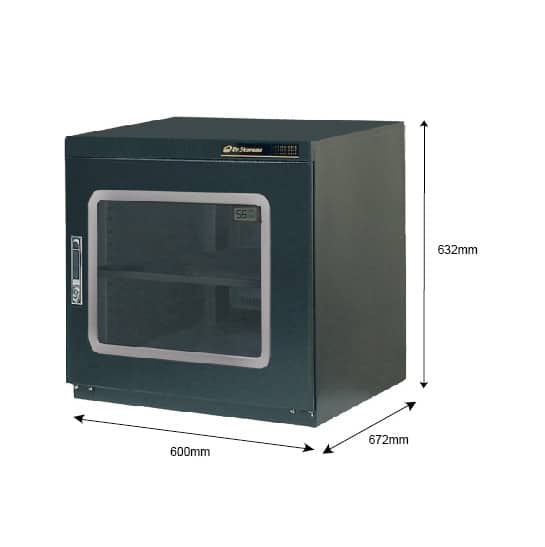
Perfect for hobbyist photographers or small lens collections. Compact enough for home studios while providing full professional protection.

  • Dimensions: 23.62″ W × 26.45″ D × 24.88″ H
  • Ideal for: 3-5 camera bodies, 8-10 lenses, accessories

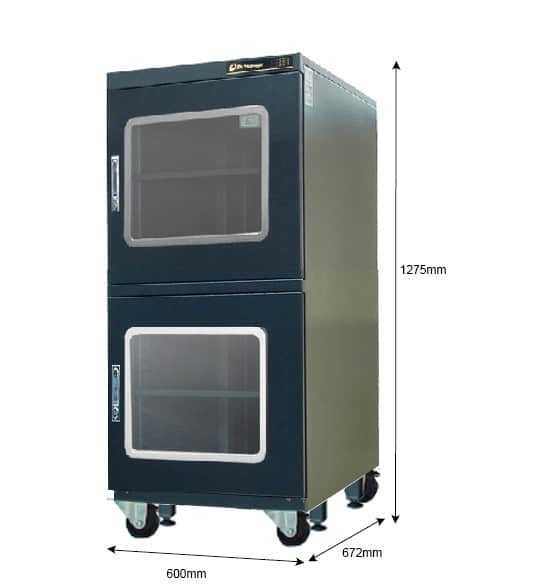
Great for enthusiast photographers with growing collections or small professional setups.

  • Dimensions: 23.62″ W × 26.45″ D × 50.19″ H
  • Ideal for: 5-8 camera bodies, 15-20 lenses, flash equipment

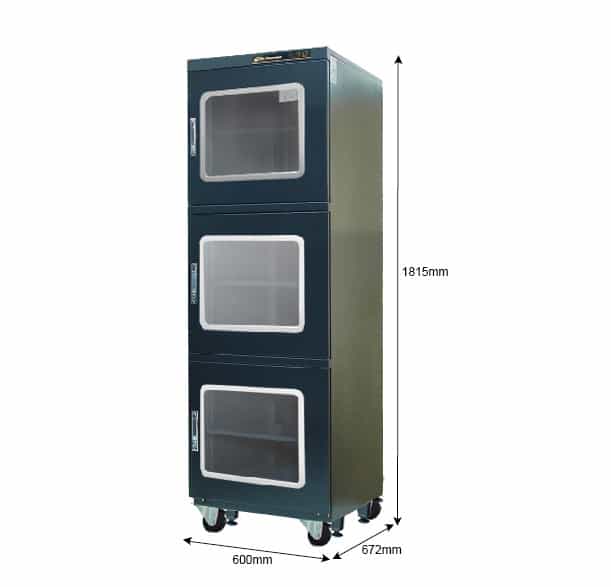
The Dr.Storage XC 600 Dry Cabinet is engineered to maintain an ultra-low internal environment of <5%RH, providing top-notch protection for moisture-sensitive devices (MSD) against humidity-related damage.

  • Dimensions: 23.62″ W × 26.45″ D × 71.45″ H
  • Ideal for: 8-12 camera bodies, 25-30 lenses, studio equipment

The largest option, perfect for professional studios, rental houses, or serious collectors.

  • Dimensions: 47.24″ W × 26.45″ D × 71.45″ H
  • Ideal for: 15+ camera bodies, 40+ lenses, complete studio setups

Standard Features That Matter for Camera Storage

All XC Series Dry Cabinets come standard with an anti-static package, adjustable shelves, wheels, locking doors, decimal digital display and a countdown calibration reminder.

Key Features for Camera Users:

  • Anti-Static Protection: Prevents static buildup that could damage sensitive electronics
  • Adjustable Shelves: Customize storage for different camera and lens sizes
  • Lockable Doors: Security for valuable equipment
  • Digital Display: Real-time humidity and temperature monitoring
  • Low Power Consumption: Only 55W/h average, 150W maximum
  • Silent Operation: Won’t disrupt studio work or home environments

The Perfect Solution for Camera Professionals and Enthusiasts

Whether you’re a weekend photographer protecting a modest camera kit, a professional shooter safeguarding thousands of dollars in gear, or a collector preserving vintage cameras and lenses, the Dr. Storage XC Series offers:

Professional-grade protection at consumer-friendly prices ✓ Proven reliability with industrial standards compliance ✓ Flexible sizing to grow with your collection ✓ Easy operation – just plug in and forget ✓ Long-term value – protecting investments worth far more than the cabinet cost

Conclusion: Why the XC Series is the Smart Choice

The Dr. Storage X2B Series of Industrial Quality Dry Cabinets are slightly more advanced than our entry level XC Series models. This positioning makes the XC Series the perfect entry point into professional humidity control – offering the essential features camera equipment needs at the most accessible price point.

Don’t let humidity destroy your valuable camera equipment. The Dr. Storage XC Series provides industrial-grade protection that’s specifically suited for cameras and optics, all at an affordably that makes professional humidity control accessible to every photographer.

Ready to protect your gear? Browse the complete XC Series lineup at smtdryboxes.com and find the perfect size for your camera storage needs.

Protect your passion. Preserve your investment. Choose Dr. Storage XC Series – the affordable dry cabinet designed with camera equipment in mind.

Dry Cabinets: Industry Standards and Prevention

Dry Cabinets: Industry Standards and Prevention

Dry Cabinets

Industry Standards and Prevention

Moisture Degradation with Advanced Dry Storage

In numerous industries, the control of relative humidity (RH) is not merely a secondary consideration but a fundamental requirement for ensuring product quality, process efficiency, and the longevity of valuable resources. This article will explore the critical role of precise humidity management, focusing on key industries and the effective solutions offered by humidity controlled storage solutions from SMT Dry Boxes.


Tech Manufacturing: Maintaining Material Properties

The broader tech manufacturing sector, encompassing electronics, optics, and precision engineering, relies on materials with specific, predictable properties.

Effects:

Dimensional Changes: Moisture can cause expansion or contraction in materials, disrupting the precision of manufactured components.

Adhesive Failure: Humidity can weaken the bond strength of adhesives used in assembly.

Surface Oxidation: Metallic components can oxidize, affecting their conductivity or reflectivity.

Standards/Compliance:

ISO 9001 quality management systems emphasize the control of environmental factors to ensure consistent product output.

SMT Dry Boxes Solution:

SMT Dry Boxes provides a range of industrial dry storage cabinets that offer stable, low-humidity environments, protecting sensitive materials and maintaining the integrity of manufactured products.


Laboratory: Ensuring Experimental Validity

In laboratory settings, where experiments are conducted to uncover fundamental principles and develop new technologies, environmental control is paramount.

Effects:

Reagent Instability: Humidity can alter the concentration and reactivity of chemical reagents, leading to inaccurate measurements and unreliable results.

Sample Alteration: Biological samples can degrade or become contaminated in uncontrolled humidity.

Instrument Error: Precision laboratory instruments can be affected by humidity, leading to measurement errors.

Standards/Compliance:

Good Laboratory Practice (GLP) regulations mandate the control and documentation of environmental conditions to ensure the quality and reliability of research data.

SMT Dry Boxes Solution:

SMT Dry Boxes’ cabinets provide the stable environment for laboratory storage necessary for accurate research and development, protecting both sensitive materials and valuable equipment.


Cultural Heritage: Preventing Material Decay

The preservation of cultural heritage objects is a critical responsibility, and moisture is a major contributor to their deterioration.

Effects:

Hydrolysis and Oxidation: These chemical processes, accelerated by moisture, can degrade organic materials like paper, textiles, and wood.

Biological Attack: High humidity promotes the growth of mold and mildew, which can cause irreversible damage to artifacts.

Dimensional Instability: Fluctuations in humidity can cause materials to expand and contract, leading to cracking and warping.

Standards/Compliance:

Conservation guidelines and museum standards emphasize the importance of controlled environments for preserving artifacts.

SMT Dry Boxes Solution:

SMT Dry Boxes offers humidity control solutions for museums that maintain stable, low-humidity conditions, preventing damage and ensuring the long-term preservation of invaluable cultural heritage.


Aviation: Maintaining Structural and Electronic Integrity

The aviation industry operates under stringent safety regulations, and moisture control is crucial for maintaining the reliability of aircraft.

Effects:

Corrosion Fatigue: The combined effects of stress and moisture can lead to corrosion fatigue and structural failure.

Galvanic Corrosion: Moisture can facilitate galvanic corrosion between dissimilar metals in aircraft structures.

Avionics Malfunction: Humidity can cause short circuits and failures in sensitive avionics systems.

Standards/Compliance:

Aviation maintenance manuals and regulations specify strict storage and handling procedures for aircraft components to prevent corrosion and ensure airworthiness.

SMT Dry Boxes Solution:

SMT Dry Boxes’ dry cabinets for aerospace provide a controlled environment for storing aircraft components and avionics, minimizing the risk of moisture-related failures and contributing to aircraft safety.


Pharmaceuticals: Ensuring Drug Stability and Patient Safety

The pharmaceutical industry places the highest priority on drug stability and patient safety, and moisture control is a key factor.

Effects:

API Degradation: Moisture can trigger hydrolysis, degrading active pharmaceutical ingredients (APIs) and reducing drug potency.

Polymorphic Transitions: Humidity can induce changes in the crystalline form of drugs, affecting their solubility and bioavailability.

Microbial Contamination: High humidity promotes the growth of microorganisms, contaminating drug products.

Standards/Compliance:

Good Manufacturing Practices (GMP) regulations mandate strict control of environmental conditions during drug manufacturing and storage.

ICH guidelines provide detailed recommendations for stability testing, including humidity control.

SMT Dry Boxes Solution:

SMT Dry Boxes offers a range of dry cabinets for pharmaceutical storage that meet the stringent requirements of the pharmaceutical industry, providing precise and reliable humidity control for API storage, formulation, and finished product storage.


Musical Instruments: Preserving Craftsmanship and Sound

Even seemingly robust musical instruments are susceptible to the damaging effects of moisture.

Effects:

Wood Warping and Cracking: Changes in humidity can cause wood to swell, contract, warp, or crack, altering the instrument’s intonation and sound quality.

Glue Joint Failure: Moisture can weaken or break down the glue joints that hold instruments together.

Metal Corrosion: Metal components like strings and keys can corrode in humid environments.

Standards/Compliance:

While not formal industry regulations, instrument makers and conservators recommend specific humidity ranges for optimal instrument preservation.

SMT Dry Boxes Solution:

SMT Dry Boxes’ solutions can be adapted to provide the stable humidity for instrument storage necessary to protect valuable musical instruments from environmental damage.


3D Printing: Maintaining Material Integrity and Print Quality

The rapidly growing field of 3D printing relies on the precise properties of printing materials, many of which are highly sensitive to moisture.

Effects:

Filament Degradation: Hygroscopic filaments like nylon and PETG absorb moisture, leading to poor print quality, nozzle clogs, and reduced mechanical strength.

Print Defects: Moisture can cause voids, stringing, and other defects in 3D printed parts.

Standards/Compliance:

While specific regulations are less common, 3D printing material manufacturers often provide storage recommendations to ensure optimal printing performance.

SMT Dry Boxes Solution:

SMT Dry Boxes offers dry storage cabinets for 3d printing filament that protect 3D printing filaments from moisture, ensuring consistent print quality and reducing material waste.


Conclusion: The Universal Importance of Moisture Control

From the microscopic precision of semiconductor fabrication to the delicate preservation of cultural heritage, controlling humidity is essential for maintaining product integrity, ensuring process reliability, and safeguarding valuable investments. SMT Dry Boxes ( https://smtdryboxes.com/) provides a range of advanced dry storage solutions that empower industries to effectively combat moisture-related challenges and achieve their operational goals.

The Hidden Threat: Protecting Pharmaceuticals from Moisture Damage

The Hidden Threat: Protecting Pharmaceuticals from Moisture Damage

The Hidden Threat

Protecting Pharmaceuticals from Moisture Damage

In the pharmaceutical industry, precision and control are paramount. Yet, an often-overlooked factor can severely compromise product integrity: moisture. Improper storage of moisture-sensitive drugs and materials can lead to disastrous consequences, impacting efficacy, safety, and profitability.

The Perils of Uncontrolled Humidity

Excessive moisture can trigger a range of detrimental effects:

  • Degradation: Many active pharmaceutical ingredients (APIs) undergo hydrolysis or oxidation, rendering them ineffective or harmful.
  • Physical Changes: Powders may cake, tablets can dissolve prematurely, and capsules can become sticky, affecting dosage and delivery.
  • Microbial Growth: High humidity fosters the growth of bacteria and mold, posing a contamination risk.
    These issues can result in:
  • Reduced drug potency
  • Shorter shelf life
  • Product recalls
  • Harm to patients

The Solution: Precise Humidity Control

To safeguard pharmaceutical products, meticulous attention to storage conditions is essential. This includes:

  • Moisture-barrier packaging: While crucial, packaging alone may not be sufficient for long-term protection.
  • Controlled environments: Maintaining specific temperature and humidity levels is vital.

This is where specialized storage solutions like dry cabinets become indispensable.

SMT Dry Boxes: Your Protection Against Humidity

At SMT Dry Boxes, we provide advanced dry cabinets engineered to maintain ultra-low humidity levels. Our cabinets offer:

  • Precise control: Ensuring a stable and optimal storage environment.
  • Reliable protection: Safeguarding APIs, excipients, and finished products from moisture-related damage.
  • Compliance support: Helping pharmaceutical companies meet stringent regulatory requirements.

Investing in proper humidity control is an investment in patient safety and the integrity of your pharmaceutical products.